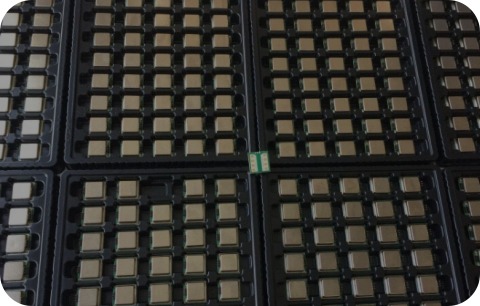
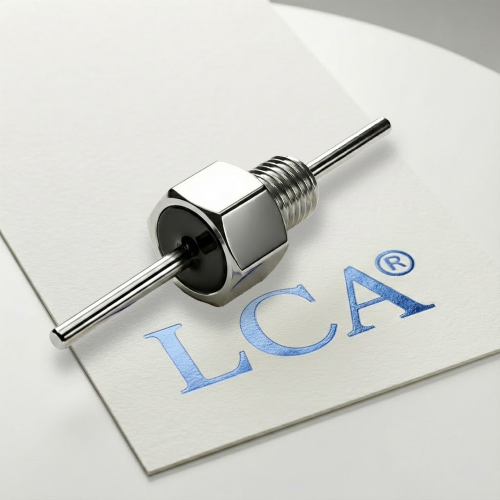
Standard catalog tubular ceramic capacitors serve a broad range of industrial and commercial EMI filtering applications. For most designs, the combination of capacitance, voltage rating, temperature range, and mounting style available in a published catalog is sufficient. But for engineers working in defense electronics, aerospace avionics, downhole drilling equipment, high-power RF systems, or implantable medical devices, catalog parameters frequently fall short in one or more critical dimensions.
Based on LCA’s experience supporting aerospace, defense, industrial control, RF power, and other harsh-environment applications, engineers often encounter situations where standard tubular ceramic capacitors cannot fully satisfy electrical, mechanical, environmental, or qualification requirements. This guide explains when customization becomes necessary, which parameters typically require modification, and how OEM engineers can prepare an effective custom specification.
What “Harsh Environment” Means for a Tubular Ceramic Capacitor
The phrase “harsh environment” refers to conditions that exceed the design envelope of standard catalog components. For a tubular ceramic capacitor, this is not a single threshold but a combination of stressors that may act simultaneously.
Temperature Extremes
The most common standard dielectrics — NPO (C0G) and X7R — are specified over a temperature range that covers most industrial applications. When an application requires stable capacitance below −55°C or above +125°C, standard formulations may not maintain their rated electrical characteristics. Applications such as downhole drilling tools, aerospace power conditioning, and certain military electronics operate at temperatures that fall outside the standard dielectric envelope. Custom ceramic formulation allows the temperature coefficient and capacitance stability to be tailored to the actual operating profile.
High Voltage
Standard catalog tubular ceramic capacitors cover DC ratings up to several hundred volts in most product families. Applications involving high-voltage power conditioning, plasma systems, broadcast RF, or dielectric heating may require voltage withstand capability beyond catalog ratings. Voltage withstand in a ceramic component depends on the combination of dielectric formulation, ceramic body density, wall thickness, and electrode geometry — not on dielectric grade alone. A custom high-voltage design requires engineering review of all these interdependent factors.
Mechanical Stress: Vibration, Shock, and Pressure
Aerospace, defense, and downhole applications impose mechanical stress levels that standard commercial components are not designed or tested to withstand. Vibration, shock, and in some cases high ambient pressure can affect both the ceramic body and the bond between the ceramic and its metallic terminations. Custom designs for these environments typically require specific body geometry, termination construction, and mechanical qualification testing.
Chemical and Moisture Exposure
Resin-sealed construction provides adequate environmental protection for most factory and cabinet-level applications. Where moisture ingress, outgassing, altitude exposure (reduced atmospheric pressure), or chemically aggressive environments would degrade resin over the component’s service life, hermetic glass-to-metal sealing is required. Hermetic sealing is a distinct manufacturing capability — not all suppliers offering resin-sealed parts can also produce and verify hermetic seals.
Qualification Documentation
For defense, aerospace, and regulated medical applications, the documentation associated with a component is a deliverable in its own right. Test reports, material certifications, lot traceability records, and in some cases qualification to a published performance specification (such as MIL-PRF-15733) must be defined and agreed at the start of the development program. Specifying documentation requirements late in a program can require retroactive testing and delay production release.
When a Standard Catalog Part Is Not Enough
| Requirement type | Typical catalog limit | Common custom trigger |
| Operating temperature | −55°C to +125°C (standard dielectrics) | Applications above +125°C or requiring tighter stability |
| DC voltage rating | Up to ~500 V in most tubular families | High-voltage power, plasma, broadcast RF |
| Body dimensions | Standard diameter series (1.1–8 mm typical) | Non-standard chassis hole, connector interface, or space envelope |
| Thread form | Standard metric (M2.5–M10) or UNC/UNF catalog series | Non-catalog thread pitch, size, or engagement length |
| Sealing | Resin-sealed standard | Hermetic required for aerospace, implantable medical, harsh chemical |
| Dielectric | NPO, X7R, Y5V standard options | Extended temperature, special dielectric constant, or loss requirement |
| Plating | Tin, silver, gold, nickel standard options | Gold bonding for hybrid circuits; specific corrosion resistance |
| Qualification | Datasheet only | MIL-PRF-15733, DO-160, medical design history file |
| Current rating | Standard catalog levels | High-current power entries requiring increased conductor cross-section |
Key Parameters to Define Before Contacting a Manufacturer
Preparing a complete specification before initiating a custom inquiry reduces the time required for feasibility assessment and avoids iterative clarification exchanges.
Electrical Parameters
Define the required capacitance value and tolerance, the maximum operating voltage (separately for DC and AC if both apply), the required insertion loss across the relevant frequency range (specified as a minimum attenuation at defined frequencies, not simply a topology preference), the current rating, and any DC bias conditions that will affect the capacitor in service.
Dielectric Material
Specify whether a standard dielectric (NPO, X7R, Y5V, SL) is acceptable or whether a custom formulation is required. If a custom dielectric is needed, define the required temperature coefficient class, capacitance stability limits across the operating temperature range, and any loss tangent or dielectric constant requirements. Standard dielectric grades cover the majority of applications; custom dielectric development is typically justified when the operating temperature or stability requirement cannot be met by any standard option.
Temperature Range and Thermal Cycling
State the minimum and maximum operating temperatures and the expected number of thermal cycles over the component’s service life. If the application involves thermal shock (rapid temperature transitions), specify the rate of change and the temperature differential. These parameters affect both dielectric formulation selection and body construction.
Mechanical Dimensions
Provide the required body outer diameter, body length and conductor (lead) diameter. If an existing standard part is close to the requirement, reference it as a starting point and note the specific dimensional differences. A dimensional drawing or envelope sketch significantly accelerates the feasibility review.
Sealing Requirement
State whether open construction, resin sealing, or hermetic glass-to-metal sealing is required. For hermetic designs, state any specific leak rate or outgassing requirement.
Plating
Specify the required plating material and any surface finish requirements. For hybrid circuit applications requiring gold wire bonding, confirm the bonding process parameters with the circuit assembly team and communicate them to the capacitor manufacturer. For applications with specific corrosion resistance requirements, specify the environment and the required protection level.
Qualification and Documentation
State the applicable qualification standard (MIL-PRF-15733, DO-160, IEC 60939-3, or other), the documentation deliverables required (test reports, material certifications, lot traceability, design history file entries), and any third-party audit or customer review requirements. This scope must be agreed before development begins, as it affects test planning, record-keeping requirements, and program cost.
Why OEM Engineers Choose LCA for Custom Tubular Capacitors
Engineering-Led Customization
LCA works directly with OEM engineers to evaluate electrical, mechanical, environmental, and qualification requirements before prototype development begins.
Dry Pressed Ceramic Technology
Compared with conventional manufacturing methods, LCA’s dry pressing process helps achieve higher ceramic density, improved dimensional consistency, and enhanced voltage withstand performance.
Flexible Mechanical Design
Custom body dimensions, conductor sizes, thread specifications, and mounting configurations can be developed to match unique installation requirements.
Hermetic Sealing Capability
For aerospace, military, medical, and harsh-environment applications, LCA supports hermetic glass-to-metal sealing solutions where resin-sealed constructions may not provide sufficient long-term protection.
Documentation Support
Qualification reports, material certifications, traceability records, and customer-specific documentation packages can be provided according to project requirements.
The Custom Development Process
Custom development of a tubular ceramic capacitor typically follows a defined sequence. The duration of each phase depends on specification complexity and whether new materials or processes are involved.
Phase 1 — Specification review and feasibility assessment: LCA’s engineering team reviews the submitted specification against manufacturing capability. This phase identifies whether the requirement can be met with existing materials and processes, whether new ceramic formulation development is needed, and what qualification testing is required. Feasibility is not guaranteed until this review is complete.
Phase 2 — Prototype design and sample production: Based on the agreed specification, a prototype design is generated and samples are produced. The number of prototype iterations depends on how closely the first samples meet the specification targets.
Phase 3 — Sample evaluation: The customer evaluates prototype samples against the specification, including any system-level integration testing relevant to the application. Design modifications are made based on evaluation results.
Phase 4 — Qualification testing and documentation: Formal qualification testing is conducted according to the agreed test plan. Test reports, material certifications, and other documentation deliverables are produced and reviewed.
Phase 5 — Production release and supply commitment: Following successful qualification, the design is released to production with a defined part number. Long-term supply continuity — including material and process change notification procedures — is agreed before production orders are placed.
Conclusion
Based on LCA’s experience supporting aerospace, defense, industrial automation, RF power, and other harsh-environment applications, successful custom capacitor development begins with a clearly defined specification. Electrical performance, mechanical constraints, environmental exposure, sealing requirements, and qualification expectations should all be considered early in the design process. When properly specified, custom tubular ceramic capacitors can provide reliable long-term performance in environments where standard catalog solutions are no longer sufficient.
Custom Specification Request Checklist
Before initiating a custom development inquiry, confirm that the following information is available:
Electrical:
- Required capacitance value and tolerance
- Maximum operating voltage (DC and/or AC, separately if both apply)
- Required insertion loss: minimum attenuation at defined frequencies
- Current rating at maximum operating temperature
- DC bias conditions (if applicable to dielectric selection)
Mechanical:
- Required body outer diameter and length
- Conductor (lead) diameter
- Thread form, pitch, and engagement length (for threaded types)
- Dimensional drawing or envelope sketch (if available)
- Reference to nearest catalog part (if applicable)
Environmental and sealing:
- Operating temperature range (minimum and maximum)
- Thermal cycling profile (number of cycles, temperature differential, rate of change)
- Mechanical environment: vibration, shock, pressure (specify levels)
- Sealing requirement: open / resin-sealed / hermetic glass-to-metal
Plating and materials:
- Required plating: tin / silver / gold / nickel
- Assembly process compatibility (solder, gold wire bond, other)
- Any specific material restriction or traceability requirement
Qualification and documentation:
- Applicable standard (MIL-PRF-15733, DO-160, IEC 60939-3, other)
- Required documentation deliverables (test reports, certifications, DHF entries)
- Third-party audit or customer review requirements
Volume and timeline:
- Estimated prototype quantity
- Estimated annual production volume
- Target date for first samples
- Target date for production release
Frequently Asked Questions
Q: What is the minimum information needed to request a feasibility assessment from LCA? The most important inputs are: required capacitance and tolerance; voltage type (AC or DC) and maximum operating voltage; operating temperature range (minimum and maximum); required body dimensions or mounting constraints; sealing requirement; current rating; and any qualification standard or documentation requirement. Volume and timeline help assess production feasibility. A reference to an existing catalog part that is close to the requirement significantly accelerates the review.
Q: What is the difference between resin-sealed and hermetically sealed construction? Resin-sealed parts fill the filter body with resin, providing protection suitable for most industrial and commercial environments. Hermetically sealed parts use a glass-to- metal seal, providing protection against moisture ingress, outgassing, and chemical exposure in environments where resin would degrade over the service life. Hermetic sealing is typically required for airborne equipment, implantable devices, military field equipment, and other applications with long service lives in demanding environments.
Q: Does customizing a tubular ceramic capacitor automatically improve its EMI performance? Not automatically. Customization addresses specific gaps between catalog parameters and application requirements. EMI performance in service depends on the full system context — the impedance environment, the mounting and grounding quality, and the noise frequency profile — as much as on the component specification. A custom part that is correctly specified for the application will perform as designed; a custom part that does not account for system-level factors may not provide the expected improvement.
Q: How does LCA’s dry pressing process relate to harsh environment performance? Dry pressing of ceramic powder before sintering produces ceramic bodies with higher density, more uniform microstructure, and tighter dimensional tolerances compared to wet processing routes. Higher ceramic density improves voltage withstand capability and mechanical strength — both directly relevant to harsh environment applications.
Recommended references
IEC 60384-14:2023+AMD1:2025 — Safety capacitor standard for EMI suppression.
IEC 60939-3:2024 — Passive EMI filter unit standard.
MIL-PRF-15733 — Military feedthrough capacitor / EMI filter specification.
CeramTec RF Tubular / Shell Capacitor page — Useful for industrial high-power tubular capacitor use cases.
Exxelia ceramic EMI/RFI filters catalog — Helpful for feedthrough and C-filter comparisons.
Need Help with Custom Tubular Capacitors for Harsh Environments?
Every application is different — and so is every specification challenge.
LCA’s engineering team can help you navigate hermetic sealing, high-voltage design, and qualification standards — and recommend the right custom tubular ceramic capacitor for your aerospace, defense, downhole drilling, medical, or high-power RF application.
Contact LCA today for one-to-one technical support and customized solutions.