Quick Definition
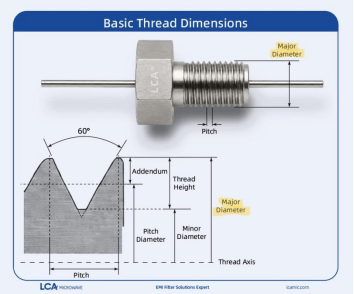
Quick Answer: Minor Diameter is the smallest diameter of an external or internal screw thread, measured across the thread roots.
Minor Diameter is the smallest diameter of an external or internal screw thread, measured across the thread roots. It is an essential thread dimension used to determine thread strength, material thickness, and compatibility in threaded connections.
What Is Minor Diameter?
The Minor Diameter is the smallest diameter of a screw thread.
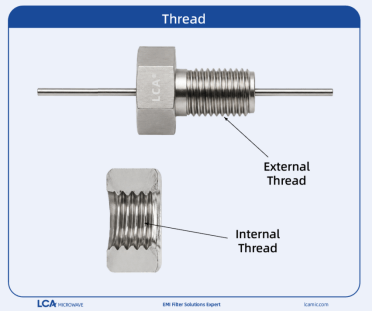
For external threads, it is measured across the bottom (root) of the thread profile.
For internal threads, it is measured across the crests of the internal thread profile, representing the smallest opening within the threaded hole.
Although it is less visible than the Major Diameter, the Minor Diameter plays a critical role in determining the mechanical strength and load-carrying capacity of threaded components.
Why Is Minor Diameter Important?
Minor Diameter directly influences the structural integrity of a threaded part. Because it represents the smallest cross-sectional area of a threaded fastener, it is closely related to tensile strength and resistance to thread failure.
It is also an important dimension during machining, quality inspection, and thread design. Engineers use the Minor Diameter to verify thread geometry, calculate thread depth, and ensure proper engagement between mating threads.
External vs Internal Minor Diameter
External Thread Minor Diameter
For bolts, screws, studs, and threaded feedthrough filters, the Minor Diameter is measured across the thread roots and represents the smallest diameter of the external thread.
Internal Thread Minor Diameter
For threaded holes and nuts, the Minor Diameter is measured across the innermost roots of the internal thread profile. It determines the minimum diameter available inside the threaded opening and influences machining requirements such as tap drill size.
How to Measure Minor Diameter
Method 1 – Vernier or Digital Caliper
Suitable for general inspection of external threads. Measure across opposite thread roots where possible.
Method 2 – Micrometer
Provides greater accuracy for precision-machined components and quality control.
Method 3 – Optical Measurement
Used for high-precision inspection in laboratories and manufacturing environments, especially for internal threads where direct measurement is more difficult.
Frequently Asked Questions
- Is Minor Diameter the same as Root Diameter?
For most standard screw threads, these terms are commonly used interchangeably. However, always refer to the applicable engineering standard for precise terminology.
- Why is Minor Diameter important?
Because it determines the smallest cross-sectional area of a threaded component, directly affecting thread strength and durability.
- Can I identify a thread using only the Minor Diameter?
No. Minor Diameter alone cannot identify a thread. The Major Diameter, thread pitch, and thread standard must also be considered.
- Does Minor Diameter affect thread engagement?
Yes. Together with Major Diameter and Pitch Diameter, it influences how mating threads engage and distribute mechanical loads.
Engineering Support CTA: Selecting a threaded EMI filter or feedthrough capacitor? Share the thread standard and size, panel thickness, voltage/current, capacitance, and environmental requirements with LCA engineers. View Thread Mount Feedthrough Filters