Why “Screw-Type” Matters in Procurement
The screw-mount design offers practical advantages:
- Mechanical retention: Secure fastening ensures stable contact and reduces risk of vibration-induced loosening in harsh environments.
- Grounding quality: Direct contact with a chassis provides a low-impedance return path essential for high-frequency attenuation.
- System integration: Fits naturally into cabinet-level or internal-mounting designs where cordsets or plug-in formats are inconvenient.
- Reliability: Preferred in industrial, medical, and military applications wherecomponent repositioning is not acceptable.
However, these advantages depend entirely on correct installation. Poor screw contact, inadequate chassis conductivity, or poor grounding can substantially degrade filtering performance in the field.
Key Selection Parameters Explained
Electrical Ratings – Voltage and Current
Selecting the correct voltage and current ratings is non-negotiable.
Rated Voltage
Must equal or exceed the maximum applied line voltage. Using a filter rated below peak operating voltage risks premature failure.
Rated Current
Must accommodate steady-state load current plus margin for inrush transients. This derating accounts for temperature rise, component aging, and unexpected load spikes.
Leakage Current – A Critical Safety Parameter
Leakage current arises from Y-capacitors, which are essential for high-frequency coupling to ground. However, leakage carries safety implications, especially in mains-connected designs. Verify that the filter explicitly meets the relevant leakage standard before procurement.
DC Resistance and Thermal Performance
The DC resistance (DCR) of the filter’s inductor determines resistive losses during operation. A filter with high DCR will generate more heat, potentially shortening lifespan.
- Estimated Operating Temperature = Ambient Temperature + Temperature Rise
Insertion Loss and Frequency Response
Insertion loss indicates how much the filter attenuates noise across different frequencies. Real-world attenuation can differ substantially if your source impedance, load impedance, or grounding differs from the test setup.
Mechanical and Safety Considerations
Package Variants and Mounting Styles
Screw-type filters come in multiple form factors:
- Flange-mount: Bolts directly to a cabinet panel; common for power entry.
- Chassis-mount: Fastens to internal enclosure structure; typical for internal power distribution.
- Feed-through: Allows signal or power lines to pass through the filter body while maintaining shielding.
Each variant has different mechanical footprints and grounding topologies.
Grounding and Installation Quality
The mechanical screw connection is only as good as the contact surfaces. Oxide, paint, or corrosion on mounting surfaces can introduce contact resistance, severely degrading filter performance.
Best practices:
- Clean mounting surfaces to bare metal before installation.
- Use appropriate screw torque.
- Confirm that the chassis itself provides a continuous, low-impedance ground reference.
Industry Standards and Compliance Context
Relevant Component Standard: IEC 60939-3
IEC 60939-3:2024 is the primary component-level standard for passive EMI filter units. It applies to filters for AC mains or other AC/DC supplies up to 1,000 V AC, 400 Hz, or 1,500 V DC.
Important limitation: This standard sets safety and performance requirements for the filter component itself, not for the finished equipment.
System-Level Standards Are Not Component Standards
Equipment-level standards such as MIL-STD-461 and EN 55032 define test methods and limits for finished products. Do not treat these as component specifications; doing so may lead to over-specification and unnecessary cost.
Practical Procurement Considerations
Vendor Comparison——More Than Just Attenuation
When comparing competing products, focus on:
| Criterion | Why It Matters |
| Rated voltage / current | Must match or exceed your application requirements |
| Leakage current | Determines medical / safety certification feasibility |
| Temperature range | Defines suitability for your operating environment |
| Grounding termination | Affects installation ease and field performance |
| Compliance documentation | Accelerates qualification and product approvals |
| Form factor | Determines physical fit in your design |
Frequently Asked Questions
Q1: Do I need to specify a screw-type filter, or could I use a panel-mount instead?
A: It depends on your mechanical design. Screw-mount is preferred when you need a robust chassis ground reference and a secure, vibration-resistant installation. Panel-mount have their place in consumer and portable equipment where bulk and cost are priorities.
Q2: If a vendor says the filter is “EMI compliant” or “EMC certified,” does that guarantee my product will pass testing?
A: No. The filter component itself may meet relevant safety standards, but finished-product EMC compliance depends on the entire design—cabling, layout, grounding, shielding, and component selection combined. A filter is a necessary but not sufficient condition for system compliance.
Q3: What if the insertion-loss curve in the datasheet doesn’t match what I measure in my actual system?
A: This is common. Datasheets typically assume a 50 Ω test impedance. Your circuit may have different source and load impedance, grounding topology, or parasitic couplings, all of which affect real-world attenuation.
Q4: Does a higher leakage-current rating mean the filter will perform worse?
A: Not necessarily. Leakage current is a safety and compliance issue, not a direct indicator of filtering performance. A filter with slightly higher leakage may still provide excellent attenuation if its LC network is properly designed.
Q5: Can I just select a filter based on current rating alone?
A: No. Voltage, leakage current, operating temperature, form factor, and the frequency range of your noise source are equally important. Selecting on current rating alone risks choosing a filter that is mechanically too large, exceeds leakage limits, or lacks attenuation where you need it most.
Conclusion
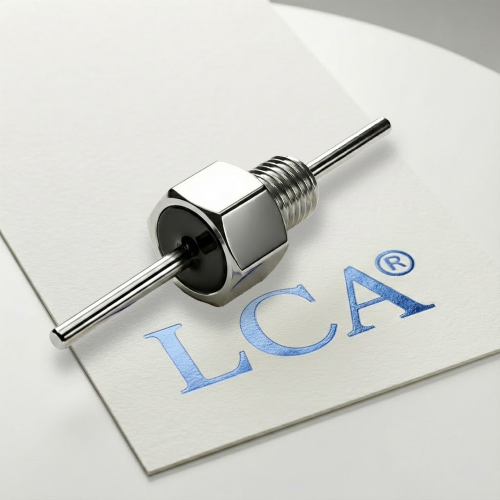
Screw-type EMI filters deliver reliable, cost-efficient EMC suppression widely adopted across industrial fields. Even with mature product performance, accurate sourcing relies on more than just insertion loss data; the following five key factors must be taken into full consideration during procurement:
1.Specify all relevant electrical and mechanical parameters.
2.Verify compliance context.
3.Evaluate installation feasibility.
4.Request application-specific guidance.
5.Plan for sample validation.
References
[1] IEC 60939-3:2024:for passive EMI filter scope, safety-test applicability, and voltage limits.
[2] MARUWA Feedthrough EMI Screw Type: for a concrete example of screw-type feedthrough filtering and shielding.
[3] HAL parameter guide: for a practical list of procurement-relevant parameters such as voltage, current, leakage current, insulation resistance, and dielectric strength.
[4] MIL-STD-461 misconception article: to avoid misusing system standards as component specs.
[5] EN 55032 / CISPR 32 overview: for system-level conducted/radiated emissions context.
Need Help Choosing the Right LCA Screw-Type EMI Filter?
LCA team provides professional one-on-one selection support for all Screw- Type EMI filters. Share your working voltage, rated current, target suppression frequency, chassis mounting conditions and end application, and LCA will recommend matching models, confirm specifications, installation tips and compliance information. Free samples are available for your pre-compliance EMC verification upon request.