Quick Definition
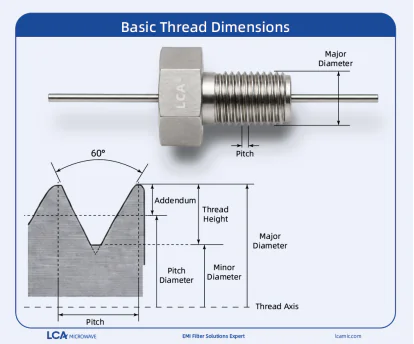
Quick Answer: An External Thread is a helical thread formed on the outside surface of a cylindrical or conical component.
An External Thread is a helical thread formed on the outside surface of a cylindrical or conical component. Common examples include threads on screws, bolts, studs, shafts, and threaded components.
What Is an External Thread?
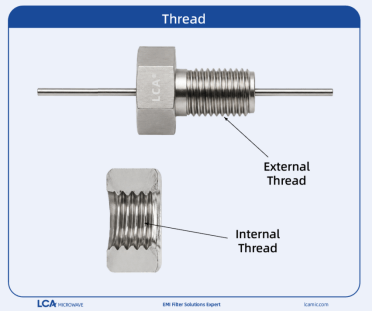
An External Thread is a helical ridge formed around the outer surface of a component.
When an external thread is inserted into a matching internal thread, the two thread profiles engage to form a mechanical connection.
Common examples of external threads include:
- Screws
- Bolts
- Studs
- Threaded shafts
- Threaded connectors
- Threaded feedthrough filters
- Threaded mounting components
External threads can be produced using processes such as thread cutting, thread rolling, grinding, or other precision manufacturing methods..
Why Are External Threads Used?
External threads are widely used to create removable mechanical connections between components.
Their design affects:
- Thread fit
- Mechanical strength
- Assembly and disassembly
- Load distribution
- Vibration resistance
- Manufacturing requirements
- Compatibility with internal threads
For reliable assembly, the external thread must match the corresponding internal thread in nominal size, pitch, thread form, and applicable tolerance or thread class.
External Thread vs Internal Thread
The fundamental difference is where the thread is formed.
| Feature | External Thread | Internal Thread |
| Location | Outside surface | Inside hole or component |
| Common Example | Screw or bolt | Nut or tapped hole |
| Common Class | 2A / 3A | 2B / 3B |
| Mating Component | Internal thread | External thread |
An external thread is normally designed to mate with a corresponding internal thread having the same thread designation and compatible tolerance class.
Frequently Asked Questions
- Is a screw an external thread?
Yes. The threaded portion of a typical screw forms an external thread.
- What components have external threads?
Bolts, screws, studs, and threaded rods are common examples of components with external threads.
- Can any internal thread match an external thread?
No. The external and internal threads must have compatible dimensions, thread form, pitch, and diameter.
- What is the difference between External and Internal Threads?
External threads are formed on the outside of a component, while internal threads are formed inside a hole or component.
Engineering Support CTA: Selecting a threaded EMI filter or feedthrough capacitor? Share the thread standard and size, panel thickness, voltage/current, capacitance, and environmental requirements with LCA engineers. View Thread Mount Feedthrough Filters