Introduction
Electronics are evolving at an accelerating pace—higher operating frequencies, smaller physical footprints, higher power density, more complex electromagnetic environments, and stricter reliability requirements. These concurrent trends create new EMI/EMC challenges that yesterday’s component solutions cannot adequately address.
A 10 MHz filter design from 20 years ago cannot address modern GHz-frequency challenges. A component optimized for consumer electronics reliability cannot meet aerospace or defense requirements. A standard component with fixed specifications cannot serve systems requiring customized performance.
Successful EMI/EMC component manufacturers don’t simply defend existing product lines. They anticipate how applications will evolve and develop capabilities to support those evolution paths. LCA’s R&D strategy reflects this forward-looking approach—investing in technologies and capabilities enabling support for demanding requirements of next-generation systems.
The relationship between today’s R&D and tomorrow’s customer solutions is direct: components LCA develops today become the solutions customers need in 3-5 years. This article outlines LCA’s future research directions and how they will serve evolving customer needs across RF, microwave, aerospace, defense, medical, and high-reliability applications.
Higher-Frequency RF and Microwave Filtering
Operating frequencies continue increasing across multiple application domains. RF systems operate at GHz frequencies. Microwave applications push into Ka-band and higher. 5G, 6G, and future wireless systems operate at frequencies pushing traditional EMI filter technologies beyond their designed performance.
At these frequencies, conventional component designs fail. Inductance that was negligible at 100 MHz becomes problematic at 5 GHz. Parasitic resonances emerge. Signal integrity degrades. Components designed with frequency assumptions valid 10 years ago cannot address modern requirements.
LCA’s R&D Focus:
- Miniaturized RF filtersoptimized for specific frequency bands (1-40 GHz and beyond)
- Low insertion-loss designspreserving signal strength at high frequencies where every dB matters
- Stable high-frequency performancemaintained across temperature extremes and production variation
- Hermetically sealed RF filterscombining RF performance with extreme-environment reliability
- Impedance matchingensuring seamless RF system integration
Higher-frequency capability requires rethinking component geometry, material selection, and manufacturing approaches. LCA’s research includes:
- Exploring novel ceramic material compositions optimized for GHz frequencies
- Developing optimized electrode structures minimizing parasitic inductance
- Advancing manufacturing precision supporting sub-millimeter features
- Validating RF performance at actual operating frequencies (not just 1 kHz specifications)
Miniaturization with Maintained Performance
Future systems demand compact designs. Modern aerospace, communications, and portable systems cannot tolerate oversized filter components. Every millimeter of size matters. Space constraints are absolute.
Yet miniaturization presents paradoxes: smaller components must deliver superior performance, maintain reliability despite space limitations, and dissipate heat in constrained environments. Scaling a component smaller without scaling its performance proportionally creates reliability risk.
LCA’s R&D Challenges:
- Reducing physical sizewhile maintaining or improving electrical characteristics
- High-density integrationcombining multiple functions in single components without performance degradation
- Reliable interconnectionssupporting miniature component leads and connections
- Thermal managementin space-constrained designs preventing thermal runaway
- Mechanical reliabilityensuring components survive vibration and thermal cycling despite reduced size
Current research includes:
- Developing surface-mount filter solutions for direct PCB integration
- Exploring wire-bondable structures with alumina substrate support for direct circuit integration in high-reliability applications (e.g., implantable medical devices), where the alumina substrate distributes bonding forces and protects the ceramic capacitor from microfractures
- Optimizing package designs maximizing performance in minimum physical space
- Validating thermal performance ensuring miniature designs don’t overheat in constrained thermal environments
Advanced Materials and Manufacturing
As performance requirements increase and operating conditions become more demanding, material selection and manufacturing process control become increasingly critical. Better performance requires better materials. Higher frequencies demand materials with lower dissipation. Extreme reliability requires materials with superior environmental resistance.
Material science isn’t stagnant. New compositions emerge. Existing materials are refined. Cost structures change. LCA’s material R&D keeps pace with evolving possibilities.
LCA’s Material R&D:
- Advanced ceramic compositionsoptimizing dielectric properties for specific frequency ranges and voltage applications
- Improved sealing materialssupporting hermetic reliability across extreme temperature ranges (-55°C to +175°C and beyond)
- High-reliability metal systemsproviding superior electrical conductivity and corrosion resistance in harsh environments
- Enhanced plating and coating technologiesextending component life in chemically aggressive or moisture-rich environments
- Material aging characterizationpredicting long-term performance and stability
Manufacturing Innovation: Precision manufacturing must evolve in parallel with materials. Manufacturing excellence enables miniaturization and performance improvements that material alone cannot achieve.
Research includes:
- Ultra-precision forming techniquesachieving sub-micron dimensional tolerances
- Advanced sintering controlproducing exceptionally consistent dielectric properties
- Automated assembly systemssupporting high-density integration without human-introduced variation
- In-process quality systemsdetecting defects at earliest possible stage, preventing downstream problems
High-Reliability for Demanding Environments
Aerospace, defense, telecommunications, and medical applications demand extreme reliability. Failure rates must be exceptionally low. LCA’s Reliability R&D:
- Extended temperature range performance
- Vibration and shock resistanceper military and aerospace standards
- Hermeticity and environmental sealingprotecting components from moisture and chemical exposure
- Accelerated life testingpredicting long-term performance under stress
This research recognizes that future high-reliability applications won’t accept component failures. Manufacturing must consistently deliver components that operate reliably across the product’s entire service life.
Customized EMI/EMC Filtering Solutions
Industry trends clearly show movement away from standardized components toward application-specific solutions. As systems become more complex and performance requirements more specific, one-size-fits-all components become inadequate. Future development will increasingly require custom designs optimized for specific application requirements.
This shift represents opportunity for manufacturers capable of systematic customization. Rather than “custom” meaning exceptions to standard production, LCA’s approach treats customization as systematic engineering enabling rapid, reliable custom solutions.
LCA’s Customization R&D: Developing systematic approaches enabling rapid customization for:
- Specific voltage and current ratingsoptimized for application power levels rather than limiting designs to standard values
- Frequency-specific performancematching actual application frequency ranges rather than generic designs
- Insertion loss optimizationtargeting power, RF, and signal-integrity requirements
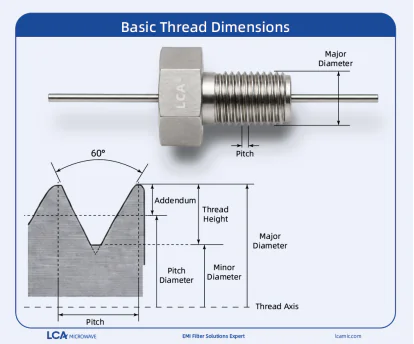
- Mechanical customization(thread pitches, connectors, mounting methods) supporting application-specific integration
- Environmental protection(sealing, potting, coating approaches) appropriate for application environment
- Interface configurationssupporting various system integration approaches without redesign
Strategic Impact: This capability transforms LCA’s role from “component supplier” to “design partner”—helping customers optimize systems rather than compromising system design to fit standard components. Customers gain:
- Components specifically optimized for their requirements
- Faster design cycles (customization rather than redesign)
- Reduced system cost (optimized rather than over-specified)
- Better reliability (components matched to actual requirements)
Enhanced Testing and Design Optimization
Future product development cycles demand faster design-to-production timelines without sacrificing quality or reliability. Advanced testing and simulation methodologies enable this.
LCA’s Testing R&D:
- Comprehensive RF characterizationat actual operating frequencies (not standardized 1 kHz)
- Multi-parameter testingcombining electrical, mechanical, thermal, and environmental validation
- Design optimization algorithmsrefining electrical characteristics based on test data
- Prototype-to-production validationconfirming designs scale reliably to volume
Advanced testing reduces development risk, confirms design feasibility, and enables confident production scaling.
From Components to Integrated EMI/EMC Solutions
The future of EMI/EMC component supply isn’t simply providing better components. It’s providing integrated solutions combining components, engineering, customization, testing, and manufacturing.
LCA’s Solution Evolution: Customers increasingly need:
- Component expertise— understanding filter design and performance
- Application engineering— matching solutions to specific requirements
- Customization capability— adapting designs for non-standard needs
- Testing and validation— proving performance before production
- Manufacturing reliability— consistent production delivering design intent
- Supply chain management— reliable, predictable component delivery
This integrated approach positions LCA as a technology partner rather than simply a component supplier—helping customers solve increasingly complex electromagnetic challenges rather than just providing products.
LCA’S Long-Term R&D Vision
LCA will continue investing in EMI, EMC and RF filter technology with focus on:
- Higher-frequency performancesupporting GHz and multi-GHz applications
- Miniaturizationenabling compact system designs without performance sacrifice
- Advanced materialsoptimizing electrical and environmental performance
- Manufacturing precisionsupporting consistent, reliable production
- Application-specific customizationmatching solutions to specific requirements
This R&D commitment reflects understanding that technological evolution doesn’t end. Customer requirements will continue advancing. Manufacturing capabilities must evolve continuously to address those advancing requirements.
Core philosophy: Our goal is not simply developing new components. It’s helping engineers solve increasingly complex electromagnetic interference and signal integrity challenges—whether through standardized solutions or customized designs optimized for specific applications.
Frequently Asked Questions
Q1: What are the main technology trends driving EMI filter R&D?
Higher operating frequencies, miniaturization, stricter EMI requirements, increased reliability demands, and more complex electromagnetic environments are driving filter technology evolution. Future applications require smaller, higher-performing, more reliable components than current standards provide.
Q2: How does LCA address miniaturization challenges?
Miniaturization requires more than simply scaling components smaller. LCA’s research focuses on maintaining electrical performance, mechanical reliability, and thermal stability in progressively smaller packages through material optimization, structure refinement, and advanced manufacturing.
Q3: Are advanced materials critical for future EMI filter performance?
Yes. As frequency increases and reliability requirements become more demanding, material properties become increasingly important. Advanced ceramic compositions, improved sealing materials, and high-reliability metals enable performance improvements that material selection 10 years ago couldn’t achieve.
Q4: How does LCA support custom EMI filter development?
LCA provides systematic approaches to developing application-specific solutions. Starting from your electrical requirements, mechanical constraints, environmental demands, and reliability targets, our engineering team develops customized designs optimized for your specific needs.
Q5: What’s LCA’s role in industry standardization efforts?
LCA participates in industry technical discussions and standards development, contributing experience and expertise toward industry standards supporting emerging technology requirements.
Conclusion
Electronics will continue evolving—higher frequencies, smaller sizes, greater complexity, stricter reliability requirements. EMI/EMC component technology must evolve correspondingly.
LCA’s R&D strategy anticipates these evolution paths and invests in capabilities to support them: higher-frequency performance, miniaturized designs, advanced materials, manufacturing precision, customization capability, and integrated solutions combining components with engineering support.
This forward-looking approach ensures LCA remains positioned to address customer needs not just today, but as applications evolve and challenges become more demanding.
For customers solving next-generation electromagnetic challenges, partnership with a manufacturer investing in relevant R&D capabilities provides confidence that solutions will evolve as requirements advance.