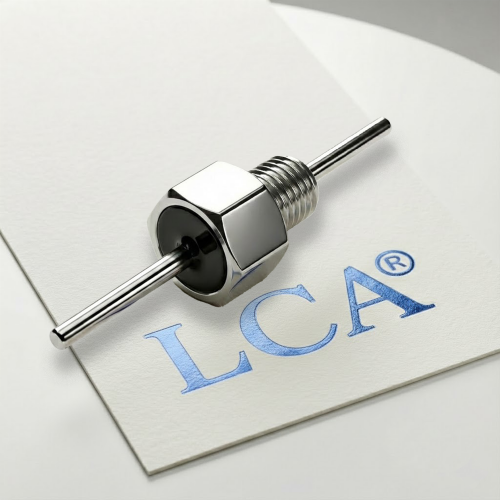
Standard miniature RF EMI filters cover many designs. Sometimes a part comes close but misses on frequency response, footprint, sealing, materials, or documentation. In those cases, a custom filter may be worth evaluating. Customization also adds cost, schedule, and supply-chain considerations, and it is not automatically the better option.
This article explains when standard parts may not be enough, what supplier literature says can be customized, how a custom development typically proceeds, and what OEM engineers should prepare before starting. The statements are general. Confirm all values against the supplier’s custom specification, test data, and system-level EMC testing.
Quick Overview: Standard vs Custom Filters
| Aspect | Standard part | Custom part |
| Specification | Fixed per datasheet | Defined with the supplier for your application |
| Cost and schedule | Often lower and shorter (quotation-dependent) | Often involves engineering effort, samples, and longer lead times (quotation-dependent) |
| Documentation | Existing datasheet and qualification records, where available | Must be defined and confirmed for the custom part number |
| Supply risk | Often more than one comparable option | May create single-source dependence |
| What to check | Does it meet all key requirements? | Is the gap real, and have all off-the-shelf alternatives been ruled out? |
These are general tendencies. Actual cost, lead time and availability depend on the supplier and the project.
When Standard Parts May Not Be Enough
Before considering customization, verify that no standard series or topology can satisfy your requirements. Customization is justified mainly when the performance gap is genuine and cannot be resolved by part selection or circuit modifications.
Frequency Response That Does Not Match the Noise Spectrum
If no standard insertion loss curve delivers adequate attenuation over your target frequency band, or if the filter response interferes with your desired signal, a tailored response may be required. Review the full curve rather than only a single data point, and validate component performance under your actual source and load impedance conditions.
Mechanical, Footprint or Mounting Constraints
Some designs call for a unique package size, mounting style, or multi-line configuration unavailable from standard catalog parts. Multi-line filter plates and filtered connectors can replace multiple discrete filters; these configurations are typically application-specific.
Environmental or Sealing Requirements
For applications exposed to moisture, outgassing, low pressure, or chemical agents, resin sealing may prove inadequate, and hermetic construction may be necessary. Hermetic sealing is not universally mandatory — this is a program-level decision, so align with your engineering and quality teams.
Material, Plating or Documentation Requirements
Programs may specify housing materials, plating, or documentation that standard catalog options do not include. Define these early, because they affect both feasibility and schedule.
LCA specializes in ceramic EMI/RFI suppression components, including feedthrough capacitors and custom EMI filter solutions. We collaborate with OEM customers to assess application requirements covering electrical performance, mechanical interfaces, sealing design, and operating environments. Our process starts with reviewing the technical gap to identify whether an off-the-shelf product, modified design, or fully custom solution is the best fit. Contact us
What Can Typically Be Customized
Customization is available across multiple areas, though the scope varies between suppliers and product series. Always confirm capabilities with your selected vendor; do not assume customization features offered by one supplier will apply to another.
Insertion Loss Curve and Topology
Filtering characteristics can be tailored to address specific EMI challenges using C, LC, Pi or T topologies. However, physical boundaries still apply. Equivalent series inductance (ESL) and self-resonant frequency (SRF) set hard limits on achievable performance, and not every target attenuation curve is feasible within a given package footprint.
Package, Housing and Mounting Style
Package dimensions, housing construction and mounting methods — such as surface-mount, solder-in, threaded or panel-mount — are frequently customizable. Since mounting and grounding directly influence real-world performance, both items must be confirmed together.
Sealing Type, Materials and Plating
Options include sealing configuration, housing materials and plating finishes, including enhanced-grade materials for harsh-environment applications. Review material declarations and project-specific compliance requirements such as RoHS / REACH, as well as lead-free or tin-lead preferences.
Ratings and Interfaces
Voltage, current, capacitance and interface details may be modified within practical limits. Operating current increases component temperature; therefore ambient temperature limits the usable current rating. Inductive components often require derating. Always validate ratings and derating rules for the custom part itself — do not rely solely on data from a similar-looking standard product series.
Need a Custom Miniature RF EMI Filter?
If standard catalog filters do not meet your application’s electrical, mechanical, or environmental requirements, LCA can review your specifications and discuss possible customization options.
For over 20 years, we have focused on ceramic EMI/RFI filters and feedthrough capacitor solutions for OEM applications.
- To help us assess feasibility, please share:
- Required frequency range and insertion loss target
- Operating voltage and current
- Package dimensions and mounting requirements
- Sealing and environmental requirements
- Estimated prototype and production quantities
Contact LCA to discuss your custom EMI filter requirements.
Alternatives to Consider Before Customizing
Selecting a Different Standard Series or Topology
An alternative standard series, higher-order topology, or different mounting configuration may satisfy your requirements without custom development. Compare insertion loss curves, SRF, electrical ratings, and mounting details across candidate components.
Adjusting the Circuit or Layout
Filter performance is strongly dependent on grounding, mounting, and isolation between input and output lines. Optimizing the ground path, placing the filter close to the enclosure feed-through point, and separating input/output wiring can substantially improve EMI suppression. Impedance conditions are also critical: datasheet insertion loss curves are typically measured in a 50 Ω test system, so actual source and load impedance in your circuit will alter real-world performance. Complete this verification before deciding that an off-the-shelf part cannot work.
Modified Standard Parts
Minor modifications to an existing standard component — such as custom plating, laser markings, or lead adjustments — often require far less engineering effort than a fully custom design. Check with your supplier to confirm whether these changes are feasible.
The Custom Development Process
Project phases and lead times differ across suppliers and programs. The workflow below serves as a general overview; final timeline and cost must be confirmed via formal quotation.
Requirement Definition and Specification
Start by identifying primary noise sources and coupling paths, then define target frequency response, electrical ratings, environmental conditions, mounting constraints, and deliverable documentation. Incomplete or ambiguous requirements are a common root cause of repeated design revisions.
Design Review and Feasibility
The supplier will assess whether the performance targets can be met within the proposed package footprint. Expect follow-up questions around impedance, grounding arrangement, and rating limits. Some performance goals may require adjustment to match physical constraints.
Prototype, Sample and Evaluation
Samples are tested against the agreed specification, usually including insertion loss measurements and S-parameter characterization where applicable. System-level testing in the actual assembly is strongly recommended, as the surrounding hardware directly impacts filter performance.
Qualification, Documentation and Release
Clarify the required test suite and deliverable documents for the custom part number. A custom component does not automatically inherit qualification status from any visually similar standard product series.
Production and Change Control
Before volume production starts, align on formal procedures for managing and notifying stakeholders of any changes to materials, manufacturing processes, or product specifications.
Inputs Purchasing Should Prepare
| Input | Description | Commonly missed |
| Noise spectrum and attenuation target | Frequencies to suppress and the required attenuation | Target given at a single frequency only |
| System impedance | Source and load conditions | Assuming 50 Ω applies |
| Voltage, current, temperature | Operating values and margin | Derating at actual temperature |
| Environment | Humidity, pressure, chemicals, vibration, shock | Left undefined or assumed |
| Mounting and grounding | Mounting style, torque limits, chassis contact | Ground impedance and layout |
| Quantity and forecast | Prototype and production volumes | No forecast shared |
| Documentation | Test reports, material declarations, traceability | Defined after the quote |
| Qualification requirements | Any specification the program requires | Assuming inheritance from a standard series |
Cost, MOQ and Lead Time Considerations
NRE and Tooling
Custom development may incur non‑recurring engineering (NRE), tooling, or sample charges. The applicability and amount vary by supplier and project scope, so ask for these items to be listed clearly within your quotation.
MOQ and Forecast
Minimum order quantities for custom components often differ from those of off‑the-shelf products. Providing a realistic volume forecast helps the supplier plan production and may influence commercial terms.
Lead Time and Schedule Risk
Custom projects include extra phases for design, sampling and performance evaluation. Specification changes or rework will extend the overall timeline. Confirm all lead times in writing and build schedule contingency into your project plan.
Risks of Custom Parts
Single-Source Dependence and Obsolescence
A custom part is often available from one supplier only. Assess long-term supply, change notification, and second-source options before committing.
Specification Changes and Re-Evaluation
Changes to requirements after samples are made can trigger redesign and re-evaluation. Freeze the specification as early as the program allows.
Qualification and Documentation Responsibility
Clarify who is responsible for which tests and documents. A statement that a custom part is based on a specification series is not a qualification record for the exact part number. Equipment-level standards such as MIL-STD-461 and DO-160 apply to equipment, not to a filter on its own.
Validation in the System
A custom filter still needs to be verified in the real system. Its effectiveness depends on installation, grounding, shielding, and layout. If testing is planned, consider having alternative filter configurations available for evaluation.
Common Mistakes When Requesting Custom Filters
- Starting with incomplete requirements.
- Giving a single-point attenuation targetinstead of a frequency range.
- Ignoring system impedanceand relying on 50 Ω data.
- Overlooking grounding, mounting, and layout.
- Leaving documentation and acceptance criteria undefined.
- Skipping evaluation of standard alternatives.
- Deferring second-source and obsolescence checks.
Frequently Asked Questions
When should I consider a custom miniature RF EMI filter?
Consider it when standard series cannot meet your frequency response, packaging, environmental, material, or documentation needs, and when changes to selection or the circuit do not close the gap.
What can usually be customized?
Supplier literature describes the insertion loss curve and topology, package and mounting, sealing, materials and plating, and ratings. The range depends on the supplier and series.
What information do I need to provide?
The noise spectrum and attenuation target, system impedance, voltage, current, temperature, environment, mounting and grounding, quantities, and documentation requirements.
Can any insertion loss curve be achieved?
Not necessarily. ESL, SRF, package size, ratings, and grounding limit what is feasible, so the supplier needs to assess it.
How long does customization take, and what does it cost?
It depends on the complexity and the supplier. Costs may include engineering and sample charges, and MOQ may differ from standard parts. Confirm by quotation.
Does a custom filter inherit the qualification of a standard series?
Not automatically. Confirm which tests and documents apply to the custom part number and request supporting evidence.
What are the main risks?
Single-source dependence, specification changes, unclear documentation responsibility, and long-term supply. Plan change control and a second-source strategy early.
Do custom filters still need system-level testing?
Yes. Results depend on installation, grounding, shielding, and layout.