What is Parasitic Inductance? Imagine water flowing through a hose. When you suddenly turn off the faucet, the hose may shudder or “knock.” This happens because the moving water has inertia and cannot stop instantaneously.
In an electrical circuit, parasitic inductance is analogous to the “inertia” of electric current. It is not a discrete inductor component we intentionally place in the circuit. Instead, it is an inherent, undesirable inductive property that comes “for free” with any conductor—be it wires, component leads, or PCB traces. It is an unavoidable byproduct of the physical structure of conductors and components, and while it cannot be eliminated entirely, it can be minimized.
The primary danger of parasitic inductance lies in its impedance to rapidly changing currents—that is, high-frequency signals.
Hazard 1: Causes Filter Capacitors to “Betray” Their Function and Fail at High Frequencies
This is the most classic and critical hazard posed by parasitic inductance.
After the frequency exceeds the self-resonant frequency, the inductive reactance of the parasitic inductance begins to dominate. At this point, the capacitor no longer behaves like a capacitor but acts more like an inductor. Its impedance increases with rising frequency, causing the filtering function to fail completely.
Hazard 2: Generates Voltage Spikes and Ringing, Damaging Components
In switching power supplies, where MOSFETs switch at high speeds, the current changes extremely rapidly. The parasitic inductance in the lines generates voltage spikes far exceeding the supply voltage. This can lead to system instability and generate electromagnetic radiation.
Hazard 3: Degrades Power Integrity, Causing Chip Instability
In high-speed digital chips, the core voltage is very low, but the current changes are enormous. Parasitic inductance present in the power distribution network creates voltage noise during sudden current changes. If this noise exceeds the chip’s tolerance, it can cause logic errors or even system crashes.
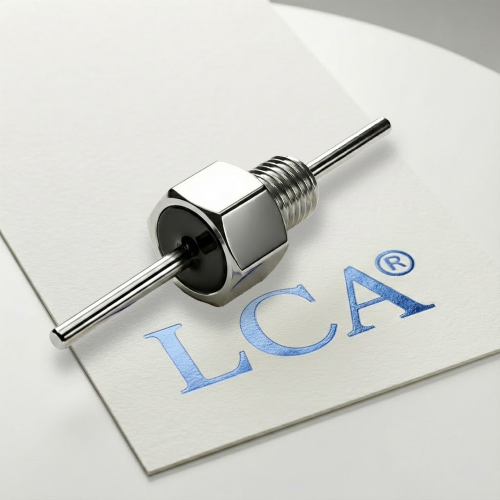
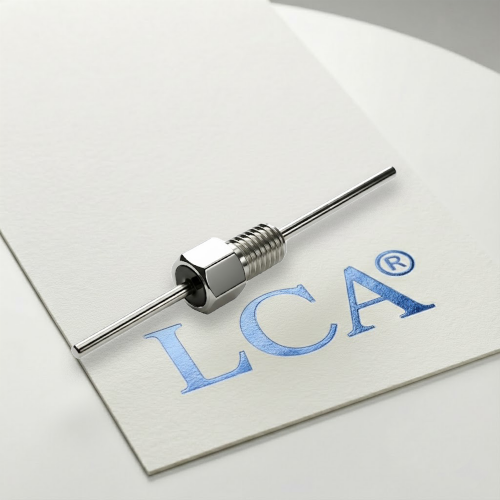
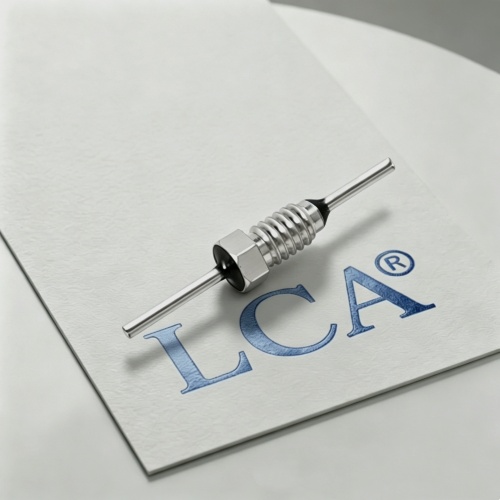
Therefore, a core challenge in high-speed, high-frequency circuit design is to identify, measure, and minimize the impact of parasitic inductance as much as possible. This is precisely where the value of components like feedthrough capacitors comes into play—their special coaxial structure reduces parasitic inductance to a very low level, thereby overcoming the performance limitations of traditional components.