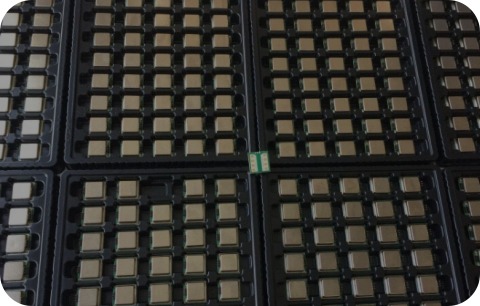
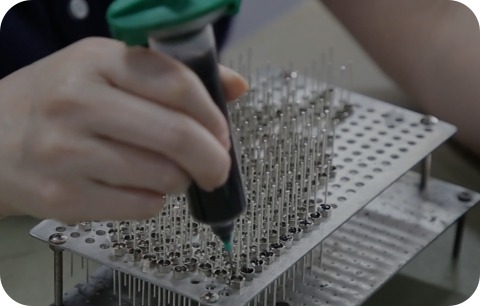
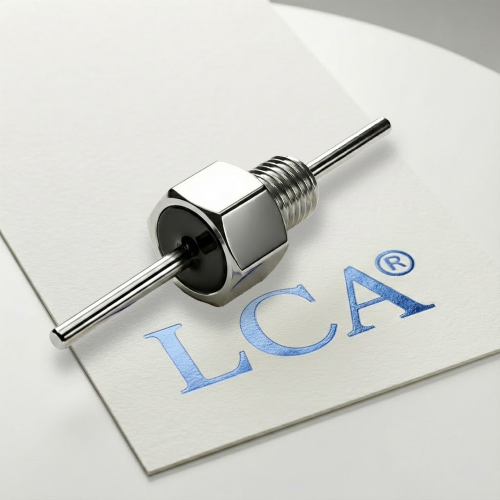
Tubular ceramic capacitors — used in feedthrough configurations where the conductor passes through the component body — address a specific class of EMI problems that standard two- terminal capacitors handle poorly. Their advantage is not capacitance value; it is geometry. The feedthrough structure reduces the parasitic inductance in the noise shunt path, extends effective filtering to higher frequencies, and places the noise suppression directly at the enclosure boundary where it is most effective.
This article maps six common EMI problems to the role tubular ceramic feedthrough capacitors play in addressing them, and explains the conditions under which they work — and where they are not sufficient on their own.
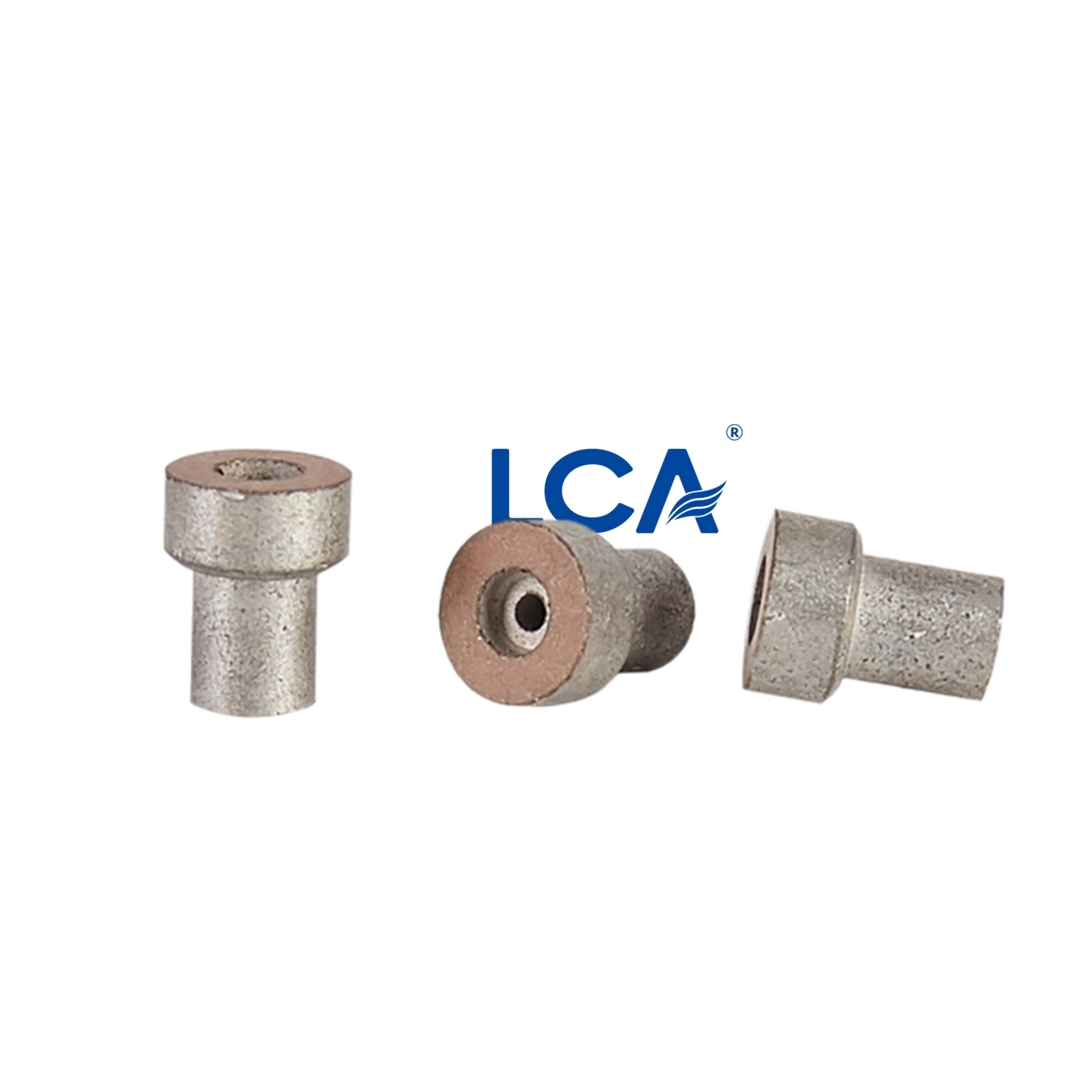
What Makes Tubular Ceramic Capacitors Different
In a standard two-terminal capacitor used as a shunt element, the noise current must travel from the line conductor into one terminal, through the capacitor body, and out the other terminal to reach ground. This path introduces equivalent series inductance (ESL). Above the component’s self-resonant frequency (SRF), the inductive reactance dominates, the shunt impedance rises rather than falls, and the capacitor stops attenuating.
In a feedthrough configuration, the conductor passes through the ceramic body. Noise is coupled capacitively from the through-conductor to the outer electrode — which connects directly to chassis ground — without requiring the current to reverse direction. This coaxial-like path has lower inductance, which raises the SRF and extends the frequency range over which the component remains capacitive and attenuates.
The second structural advantage is placement. A tubular ceramic capacitor installed at a panel or chassis wall puts the noise shunt at the exact point where the conductor crosses the enclosure boundary. This physically separates the filtered and unfiltered sides of the circuit — a separation that PCB-mount capacitors cannot replicate.
Both advantages depend on installation quality. If the outer electrode is not bonded directly to a low-impedance chassis ground — through proper torque on a screw-type installation or a clean solder joint on a solder-in type — the ground path impedance increases and the high-frequency advantage largely disappears.
Problem 1 — Conducted Noise Entering or Leaving a Shielded Enclosure
The Problem
A shielded enclosure is only as effective as its weakest entry point. Every conductor that enters or exits the enclosure — power line, signal cable, sensor wire — is a potential path for conducted noise to bypass the shielding entirely. If the conductors are unfiltered at the enclosure boundary, noise generated inside the enclosure can propagate out onto external cables, and external noise can couple into sensitive internal circuits.
How Tubular Ceramic Capacitors Address It
A tubular ceramic feedthrough capacitor installed at the panel wall places the noise shunt at the enclosure boundary. High-frequency noise on the incoming conductor is diverted to chassis ground before entering the shielded volume. Outgoing noise is suppressed before it reaches the external cable run.
Because the panel wall itself provides the physical separation between the filtered inside and the unfiltered outside, there is no length of cable on the filtered side that can re-couple noise from the unfiltered side. This boundary placement is more structurally effective than placing a PCB capacitor some distance inside the enclosure, where unfiltered cable inside the enclosure can still radiate or couple before the filter is reached.
Problem 2 — High-Frequency Common-Mode Noise on Power Lines
The Problem
Switching power supplies, motor drives, and inverters generate common-mode noise — noise that appears on both active conductors simultaneously relative to chassis ground — at switching frequencies and their harmonics. As these switching frequencies have increased in modern SiC-based and GaN-based designs, the harmonic content extends further into the MHz range, where standard shunt capacitors have already transitioned above their SRF and no longer provide effective attenuation.
How Tubular Ceramic Capacitors Address It
By reducing the shunt-path inductance, tubular ceramic feedthrough capacitors extend the frequency range over which capacitive shunting remains effective. For common-mode noise on power lines, they are applied as shunt elements from each active conductor to chassis ground at the power entry point.
For applications where the noise spectrum requires broader attenuation, the feedthrough capacitor can be combined with series inductance to form an L-C or Pi-type filter. A single feedthrough capacitor (C-type) addresses common-mode noise over a bounded frequency range; a Pi or T topology extends the attenuation bandwidth. Complete feedthrough EMI filter assemblies integrate these elements into a single housing.
Note: tubular ceramic capacitors address common-mode noise directly. Differential-mode noise — noise appearing between the active conductors — requires series inductance in the signal path, which the capacitor alone does not provide. If measurement shows differential- mode noise is dominant, the filter topology must include series elements.
Problem 3 — Conducted Emissions Failures in the CISPR Band
The Problem
Equipment fails a conducted emissions test under CISPR 32 or EN 55032 in the 150 kHz to 30 MHz range. The failure is at the power entry port, and the excess emission indicates that noise generated inside the equipment is reaching the external power network at levels above the applicable limit.
How Tubular Ceramic Capacitors Address It
A tubular ceramic feedthrough capacitor at the power entry point shunts common-mode conducted noise to chassis ground before it reaches the measurement point on the external power line. Whether this resolves the failure depends on: the noise mode (common-mode suppression requires capacitive shunting; differential-mode requires series inductance); the frequency range and magnitude of the excess emissions; and whether the selected capacitor’s insertion loss covers the failure frequency.
For marginal failures in the lower CISPR band, a C-type feedthrough filter may be sufficient. For larger shortfalls or failures across a broad frequency range, a complete multi-element filter with both capacitive and inductive elements is likely required.
Problem 4 — Noise Coupling Through Motor Drive and VFD Panel Entries
The Problem
Variable frequency drives and servo amplifiers generate significantly conducted noise at their switching frequencies and harmonics, which propagates along power and control cables connected to the drive. Control signal cables, feedback lines, and communication cables entering the same cabinet can pick up this noise and carry it to sensors, PLCs, and other control electronics.
How Tubular Ceramic Capacitors Address It
Tubular ceramic feedthrough capacitors at the cabinet entry points for control and signal cables shunt common-mode noise from these cables to the cabinet chassis before it reaches the internal control electronics. This is a complementary measure to power-entry filtering and does not substitute for it.
For high-current three-phase power entry from a VFD, dedicated three-phase EMI filter assemblies with current ratings appropriate to the drive input are typically required. Single-conductor tubular ceramic feedthrough capacitors are not appropriate for high-current power entries without verifying that the current rating and leakage current specification of the specific product matches the application requirements.
In installations with residual current devices (RCDs), the capacitance to earth from all filter elements — including any tubular ceramic capacitors — contributes to earth leakage current. Verify the total leakage current against the RCD trip threshold before specifying filter capacitance values.
Problem 5 — Signal Line Interference at Enclosure Entry Points
The Problem
Sensor lines, instrumentation inputs, and fieldbus cables (Profibus, EtherCAT, CANopen, 4–20 mA analog loops) entering shielded enclosures pick up common-mode noise that causes measurement errors, communication faults, or spurious outputs. Standard PCB-mount filtering provides inadequate isolation because the noise enters the enclosure before reaching the filter.
How Tubular Ceramic Capacitors Address It
Tubular ceramic feedthrough capacitors are placed at the enclosure entry points for signal lines. They shunt common-mode noise to chassis before it enters the shielded volume. For this application, capacitance selection requires explicit consideration of signal bandwidth, not just noise attenuation.
Adding filter capacitance to a signal line introduces load capacitance that slows signal edges, reduces bandwidth, and can affect high-speed protocols. For high-bandwidth data lines, smaller capacitance values that maintain adequate SRF margin and preserve signal integrity within the protocol’s operating range are typically required. For fieldbus protocols with defined signal bandwidth requirements, verify that the filter capacitance does not degrade the signal before specifying.
Problem 6 — High-Frequency Noise Above 30 MHz
The Problem
Standard conducted emissions testing under CISPR standards covers up to 30 MHz for most equipment categories. Noise above 30 MHz can drive cables and PCB structures as unintentional antennas, contributing to radiated emissions. Standard filter capacitors operating above their SRF provide no useful attenuation in this range.
How Tubular Ceramic Capacitors Address It
The lower shunt-path inductance of tubular ceramic feedthrough capacitors extends the frequency range over which capacitive shunting remains effective, providing suppression at frequencies where standard capacitors have already become inductive. This is not guarantee of suppression at any specific frequency above 30 MHz — the actual SRF depends on the specific component, its capacitance value, and the quality of the chassis ground bond, all of which must be verified from the product’s datasheet.
Measurement above 30 MHz typically requires a vector network analyzer (VNA) in a two-port test fixture. This differs from a standard conducted emissions scan. Pre-compliance radiated emissions scans can identify whether high-frequency conducted noise is contributing to radiated failures before formal testing.
When Tubular Ceramic Capacitors Are Not the Right Solution
| Problem type | Limitation | What is needed instead |
| Differential-mode noise dominant | C-type capacitor does not provide series impedance | Series inductor; LC or Pi topology |
| High-current three-phase power entry | Current rating must be verified; single feedthrough types often insufficient | Dedicated three-phase EMI filter assembly |
| Broad-spectrum noise requiring high insertion loss | C-type alone provides limited bandwidth | Complete multi-element filter (Pi, T) |
| Solder-in type on moving/flexing cable | Permanent solder joint not suitable for mechanical cycling | Screw-type or connector-integrated filter |
| Medical device with leakage current constraint | Capacitance to earth contributes to patient leakage current | Leakage current analysis required; capacitance may need to be reduced |
Conclusion
Tubular ceramic feedthrough capacitors solve the parasitic inductance problem of standard capacitors. Their coaxial structure lowers ESL, raises SRF, and places filtering at the enclosure boundary—where it works best.
They address six common EMI problems, but success depends on correct application. This requires verifying the noise mode, SRF margin, signal bandwidth, and installation quality.
Based on LCA’s experience, these capacitors are not universal. For example, differential noise needs series inductance, and three-phase applications require dedicated filters. Additionally, medical devices demand leakage current analysis. When applied correctly, they provide reliable, high-frequency EMI suppression.
Frequently Asked Questions
Q: How do I know if my EMI problem is common-mode or differential-mode? Common-mode noise appears on both conductors simultaneously relative to chassis ground; differential-mode noise appears between the active conductors. A common-mode current probe placed around a cable bundle measures common-mode current directly. Comparing noise with the chassis ground connected versus isolated can also help identify the dominant mode. Tubular ceramic feedthrough capacitors address common-mode noise. Differential-mode noise requires series inductance in the signal path.
Q: My device failed a conducted emissions test. Will a tubular ceramic capacitor fix it? It may reduce the failure if common-mode noise in the conducted band is the dominant contributor. This requires that the selected capacitor’s insertion loss covers the failure frequency. For larger shortfalls, or where differential-mode noise contributes significantly, a more complex multi-element filter is likely required.
Q: My tubular ceramic capacitor is correctly specified but the problem is not solved. What should I check? Check in this order: (1) chassis ground bond quality — clean metal contact, correct torque or solder joint. (2) whether the SRF of the selected capacitor is above the noise frequency. (3) whether the unfiltered and filtered sides of the cable run are physically separated. (4) whether the noise mode is actually common-mode — if differential-mode noise dominates, a capacitor alone will not resolve it.
Q: How close to the panel entry does the capacitor need to be? As close as physically possible. Each length of unfiltered cable inside the enclosure after the entry point is exposed to coupling from other circuits. This coupling occurs before the filter is reached. In an ideal installation, the feedthrough is at the panel wall itself. In that case, there is no unfiltered segment inside the enclosure.
Need Help with Tubular Ceramic Capacitors for Your EMI Issues?
Every application is different — and so is every EMI challenge.
LCA’s engineering team can help you understand the advantages, limitations, and proper implementation of tubular ceramic feedthrough capacitors. They can also recommend the right solution for your power, signal, or VFD application. Additionally, they can provide guidance for your enclosure-entry application.
Contact LCA today for one-to-one technical support and customized EMI suppression recommendations.