In today’s world of ubiquitous wireless communication, the core WiFi and Bluetooth functionalities of our smartphones, smart home speakers, and precision IoT factory equipment all rely on sophisticated RF modules. These modules act as sensitive sensory organs, capturing and transmitting signals within the invisible electromagnetic spectrum. However, a significant challenge persists: the module itself is a complex electromagnetic environment where high-speed digital circuits, switching power supplies, and sensitive analog RF links are compressed into a minuscule footprint. The electromagnetic noise they generate easily causes mutual crosstalk, leading to signal blurring, reduced transmission range, or even connection interruptions. The key to resolving this contradiction often lies in a seemingly inconspicuous yet critical component: the Feedthrough Capacitor.
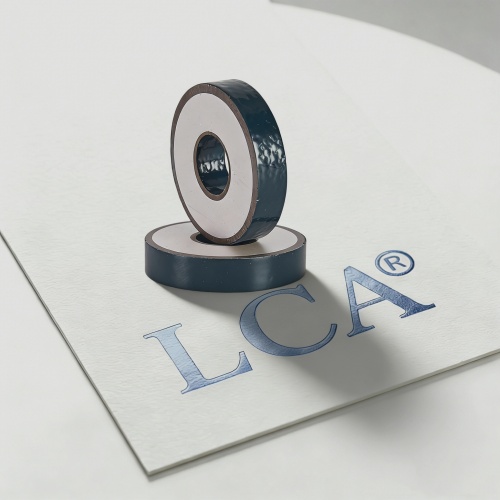
Also known as a Feedthrough Filter, the design philosophy of this component strikes at the heart of the problem. It completely abandons the traditional pin-soldering method of standard capacitors. Its unique three-terminal structure allows it to act like a sturdy rivet, passing directly through and locking firmly onto the metal shielding case of the RF module. The internal capacitive dielectric becomes the sole “clean channel” for the conductor to pass through the shield. This exquisite physical structure is the source of its power.
When a conductor carrying power—ridden with switching noise from the mainboard—attempts to enter the shielded cavity, the capacitive characteristics of the feedthrough capacitor present extremely low impedance to high-frequency interference. It instantly diverts this noise energy to the metal case, which then channels it to the system ground plane. More importantly, its input and output terminals are naturally isolated by the metal case, completely eliminating the possibility of noise “taking a detour” and achieving a true “seal” of the aperture.
Therefore, in nearly every WiFi/Bluetooth RF module pursuing high performance and reliability, the feedthrough capacitor is ubiquitous. Like a loyal guardian, it stands sentinel at the power inlet of the module’s shielded cavity—the primary path for noise intrusion. If power noise from the mainboard were to march in unimpeded, it would directly drown out the weak signals generated by the Phase-Locked Loops (PLLs) and Low-Noise Amplifiers (LNAs) inside the RF chip. The feedthrough capacitor establishes the first and most rigorous line of defense here, ensuring that every watt of power delivered to the heart of the module is pure and uncontaminated.
It silently upholds the order of the signal world, allowing our taken-for-granted wireless connections to remain clear and smooth amidst the complex and noisy electromagnetic environment. This is the immense technical value carried by the tiny component known as the feedthrough capacitor.