In the field of Electromagnetic Interference (EMI), Radiated Noise and Conducted Noise are the two primary forms of electromagnetic noise propagation. They infiltrate electronic devices through different paths, causing effects that range from performance degradation to permanent damage of components.
I.Core Definitions: The Nature and Difference Between the Two Noises
1.Radiated Noise
Common Analogy: Like a “radio broadcast”—transmitting “electromagnetic signal static” in all directions.
Essential Definition: An electromagnetic interference signal that propagates through space in the form of electromagnetic waves.
Propagation Path: Air/Space (requires no physical medium).
Typical Sources: 5G base stations, millimeter-wave radar, Wi-Fi routers, microwave ovens, RF antennas.
2.Conducted Noise
Common Analogy: Like “impurities in a water pipe”—flowing along conductors to reach components.
Essential Definition:An electromagnetic interference signal that propagates along wires/conductors.
Propagation Path: Physical carriers like power lines, signal lines, control lines.
Typical Sources: Industrial variable frequency drives, power grid fluctuations, motor startup, power adapters.
II.Specific Impacts on Electronic Components: From Functional Anomalies to Permanent Damage
The core function of electronic components is the “stable transmission/processing of electrical signals.” Interference from both types of noise essentially involves “superimposing unwanted signals” or “disrupting the operating environment,” but their paths and primary targets differ.
1.Conducted Noise: Strikes Directly at the Core via Wires, Affecting Mid-to-Low Frequency Components First
Conducted noise directly invades component internals through power or signal lines, interfering with power supply or signal paths. This creates a more immediate impact and is more likely to cause functional failures.
2.Radiated Noise: “Air-Gap” Interference Through Space, Most Affecting High-Frequency/Sensitive Components
Radiated noise couples onto component pins, PCB traces, or casings via electromagnetic waves, inducing unwanted voltages/currents. It is particularly destructive to high-frequency and high-sensitivity components.
III. Core Summary: The Nature of Interference and Protection Logic
1.Nature of Interference
Conducted Noise: “Wired intrusion,” primarily affects mid-to-low frequencies, impacts power supply and signal transmission paths, and easily leads to functional failures and accelerated aging of components.
Radiated Noise: “Wireless coupling,” primarily affects high frequencies, impacts signal purity and the performance of sensitive components, and easily leads to precision loss and high-frequency failure.
2.Core of Protection
Conducted Noise: Requires “shunting to ground” (using components like EMI feedthrough capacitors, common-mode chokes) to divert the noise from the conductor and cut off its propagation path.
Radiated Noise: Requires “Shielding+Filtering” (using elements like the metal shield of a feedthrough capacitor, PCB ground planes, shielding enclosures) to block spatial coupling and prevent noise induction.
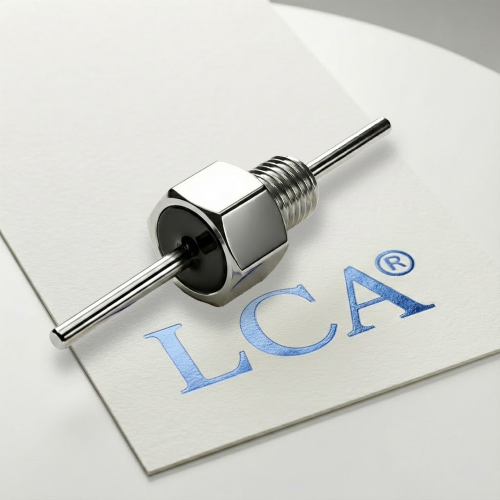
Conclusion: Scenarios involving mid-to-low frequencies and power systems (e.g., industrial VFDs, power adapters) require a primary focus on suppressing Conducted Noise. High-frequency, sensitive scenarios (e.g., 5G, millimeter-wave radar, medical equipment) require simultaneous reinforcement against both Radiated and Conducted Noise. This is the core value of the LCA® EMI feedthrough capacitor’s “lead-less low-inductance+metal shielding” design—it provides a one-stop solution to both types of noise interference, ensuring the stable operation of components.