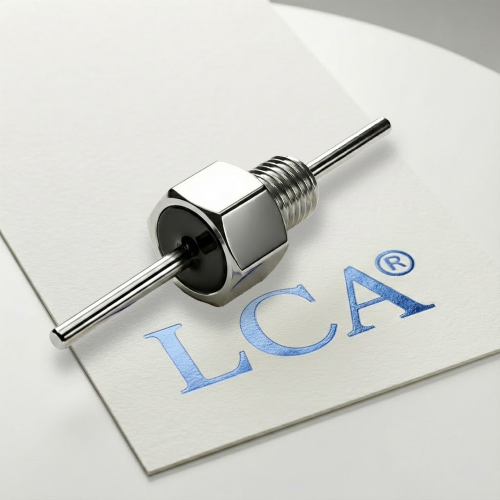
5G phone showing full bars but constantly dropping connections? Smart car millimeter-wave radar frequently misjudging obstacles? Industrial equipment mysteriously crashing and rebooting? These seemingly unsolvable malfunctions might all share the same root cause–a failing EMI Feedthrough Capacitor Filter. Hidden deep within electronic devices, this small component boasts a storied history of invention, unique design ingenuity, and serves as the essential “Electromagnetic Guardian” for stable equipment operation.
From Aerospace to Everyday Use: The Extraordinary Origins of the Feedthrough Capacitor
Few realize that the feedthrough capacitor wasn’t originally designed for common electronics but was born from the demanding requirements of aerospace. In the mid-20th century, rocket launch systems faced extreme high-frequency electromagnetic interference (EMI). During launch, the electronic systems in the rocket fuselage could be swamped by high-frequency signals from radar and communication equipment, leading to data transmission errors or, in severe cases, launch failures.
Traditional capacitors suffered from drastically reduced filtering performance at high frequencies, completely failing to meet the astronautical-grade EMC protection standards. To solve this critical challenge, engineers developed the first feedthrough capacitors. Their unique structural design successfully resolved the high-frequency EMI issues in rocket launch equipment, making them an “exclusive protective component” for the aerospace sector.
With the advancement of electronic technology and the growing need for high-frequency EMI protection in civilian fields like 5G, millimeter-wave radar, and smart vehicles, the feedthrough capacitor gradually descended from its “aerospace pedestal” into the mainstream. It has now become a standard component in various high-frequency electronic devices, safeguarding the technology we rely on every day.