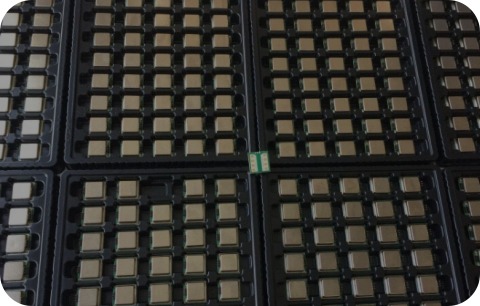
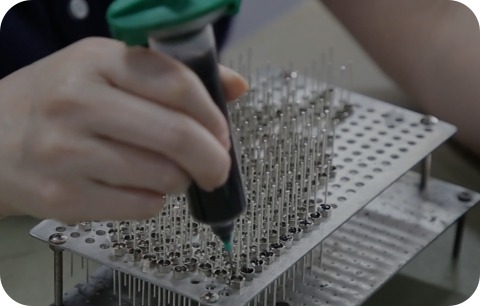
Electronic devices use a large number of various types of electronic components, and equipment failures are mostly caused by electronic component failures or damages. Therefore, it is particularly important to correctly detect electronic components.
- Measure the polarity of each pin of the rectifier bridge
Set the multimeter to R×1k mode, connect the black probe to any pin of the bridge stack, and then measure the other three pins with the red probe. If the readings are all infinite, connect the black probe to the positive output terminal of the bridge stack. If the reading is 4-10kΩ, connect the black probe to the negative output terminal of the bridge stack, and the other two pins to the AC input terminal of the bridge stack.
- Crystal oscillator damage discrimination detection
First, use a multimeter (R×10k range) to measure the resistance value at both ends of the crystal oscillator. If it is infinite, it indicates that the crystal oscillator has no short circuit or leakage; Insert the test pen into the mains socket again, pinch any pin of the crystal oscillator with your fingers, and touch the metal part at the top of the test pen with the other pin. If the neon bubble of the test pen turns red, it indicates that the crystal oscillator is good; If the neon bubble does not light up, it indicates that the crystal oscillator is damaged.